The 2026 World Science and Technology Development Forum (WSTDF) took place at Chongqing Science Hall, China, from 21 to 23 October 2026, under the theme “Co-evolution: Shaping the New Ecology of the Future Industry”. Initiated by the China Association for Science and Technology (CAST), the WSTDF addresses issues of interest to the international academic community and topics at the frontiers of science and technology. Through the release of major outcomes, it has grown into a globally influential science and technology event and a flagship platform connecting China’s scientific and technological community with its international counterparts.
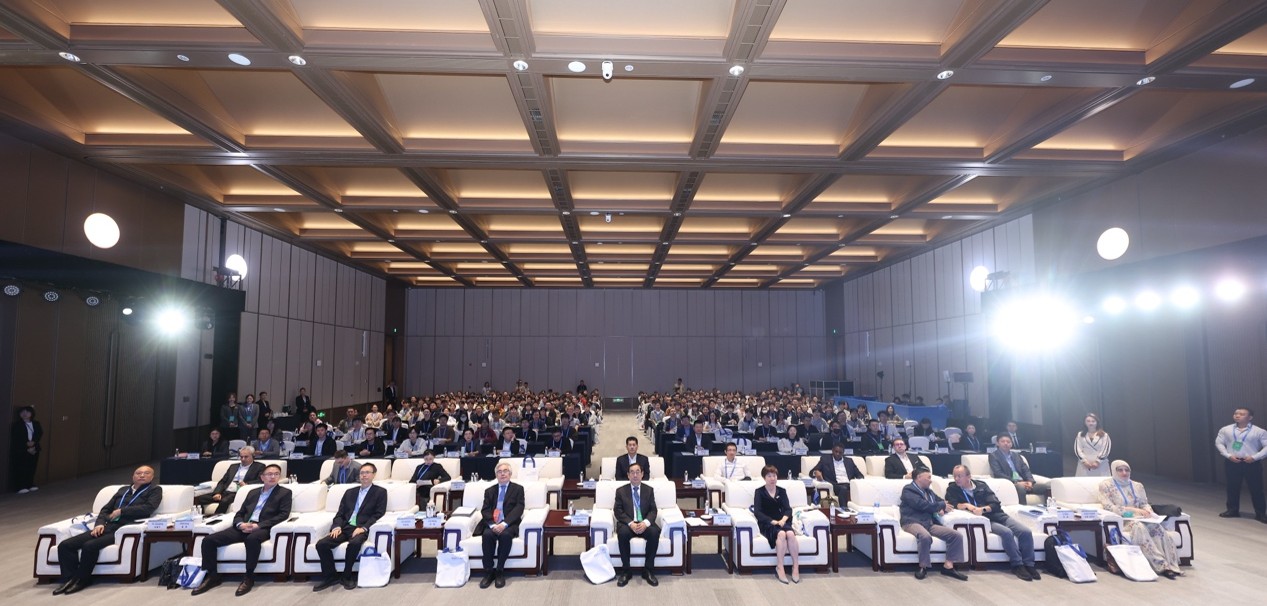
The Forum on New Energy System Development Powered by Hydrogen, a parallel forum of the 2026 WSTDF, successfully held at Chongqing Science Hall, China
On 23 October, the Forum on New Energy System Development Powered by Hydrogen concluded successfully at Chongqing Science Hall, China, during the 2026 WSTDF, with the International Hydrogen Fuel Cell Association (IHFCA) serving as co-organiser and Mingyue Lake Laboratory as joint co-organiser. More than 300 business representatives, experts and scholars from the hydrogen sector in China and abroad gathered to exchange views on global hydrogen supply systems and trade, demonstration applications and international cooperation. They explored development pathways and opportunities for hydrogen to support the development of a new energy system.
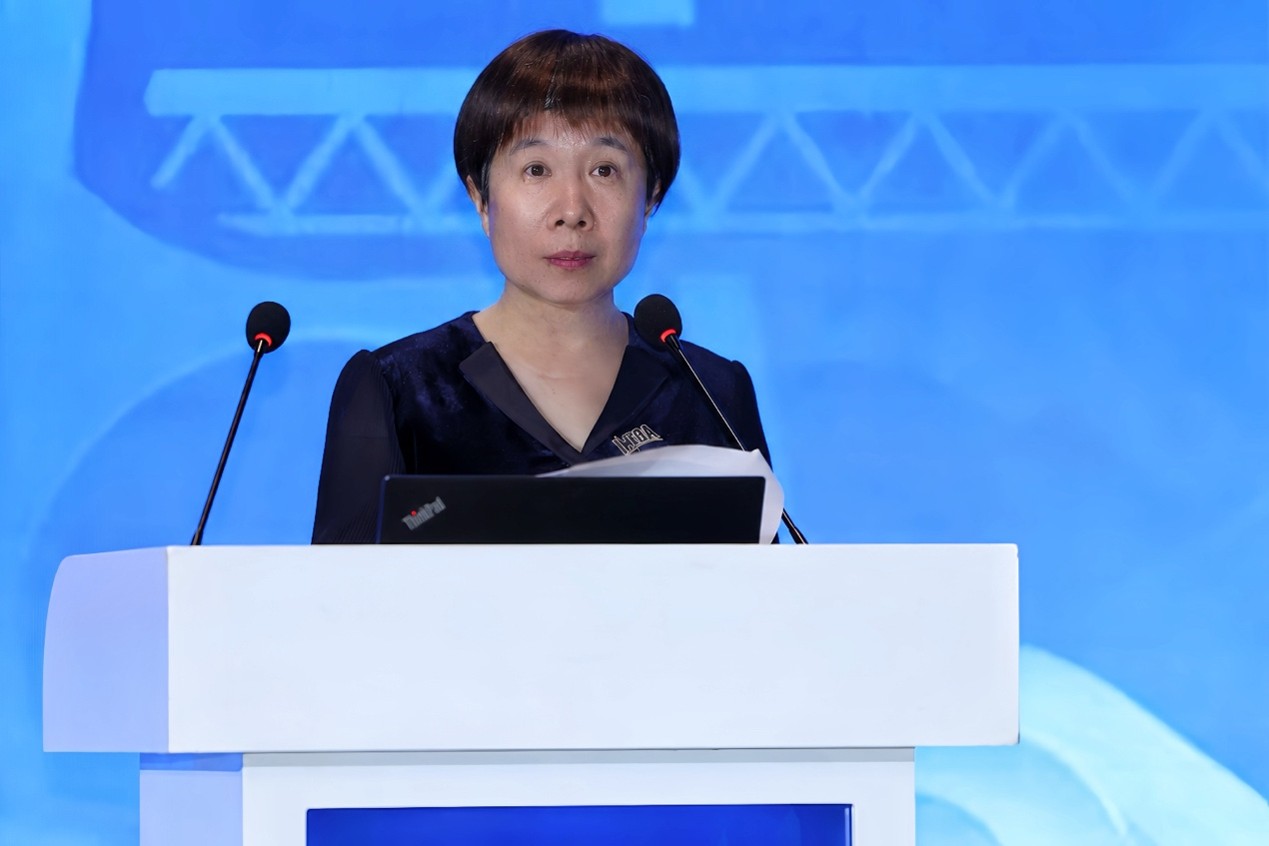
WANG Ju, Secretary General, IHFCA; Member of the UN Council of Engineers for the Energy Transition (CEET)
The opening ceremony was moderated by WANG Ju, Secretary General of IHFCA and Member of the UN Council of Engineers for the Energy Transition (CEET). ZHANG Jinhua, Standing Executive Vice Chairman of IHFCA and Chairman of the China Society of Automotive Engineers (China SAE), delivered the opening remarks. He noted that the global hydrogen industry was moving from strategic planning towards broader deployment. He called on the Chengdu-Chongqing region to draw on its strengths in clean energy, automotive manufacturing and research and innovation to develop hydrogen corridors into an industrial ecosystem linking hydrogen supply, equipment, applications and services.
He recommended sustained efforts in four areas: regional coordination, application scenarios, joint innovation and international cooperation. These efforts should improve hydrogen infrastructure, expand the range of applications, advance breakthroughs in key technologies and cooperation on standards, and generate replicable experience in coordinated regional development to support the development of a new energy system.
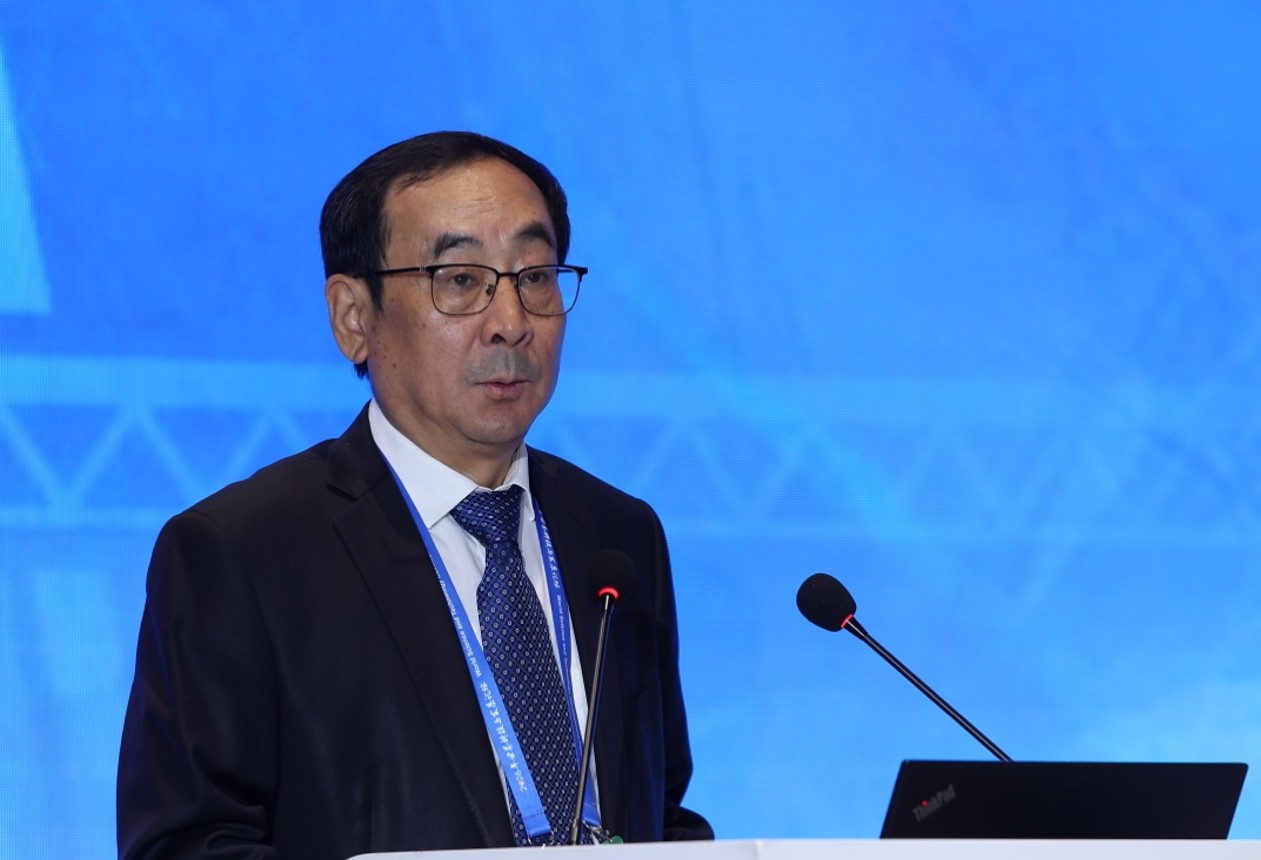
ZHANG Jinhua, Standing Executive Vice Chairman, IHFCA; Chairman, China Society of Automotive Engineers (China SAE)
ZHANG Jinhua, Standing Executive Vice Chairman of IHFCA and Chairman of China SAE; WANG Ju, Secretary General of IHFCA and Member of CEET; XUE Xingyu, Lead Scientist, Aramco Asia; Mikaa BLUGEON-MERED, Senior Expert on Global Hydrogen Markets at the University of Québec and Clean Hydrogen Research Expert in Canada; and Dinah YAQUB, Trade and Investment Consul at the British Consulate-General in Chongqing, jointly witnessed the launch of the report “Global Hydrogen Transportation Pathways Analysis: China’s Medium- and Long-Term Hydrogen Supply–Demand Dynamics and Trade Outlook”. Supported by the United Nations Industrial Development Organization (UNIDO), the report was jointly prepared by IHFCA, Saudi Aramco and industry experts.
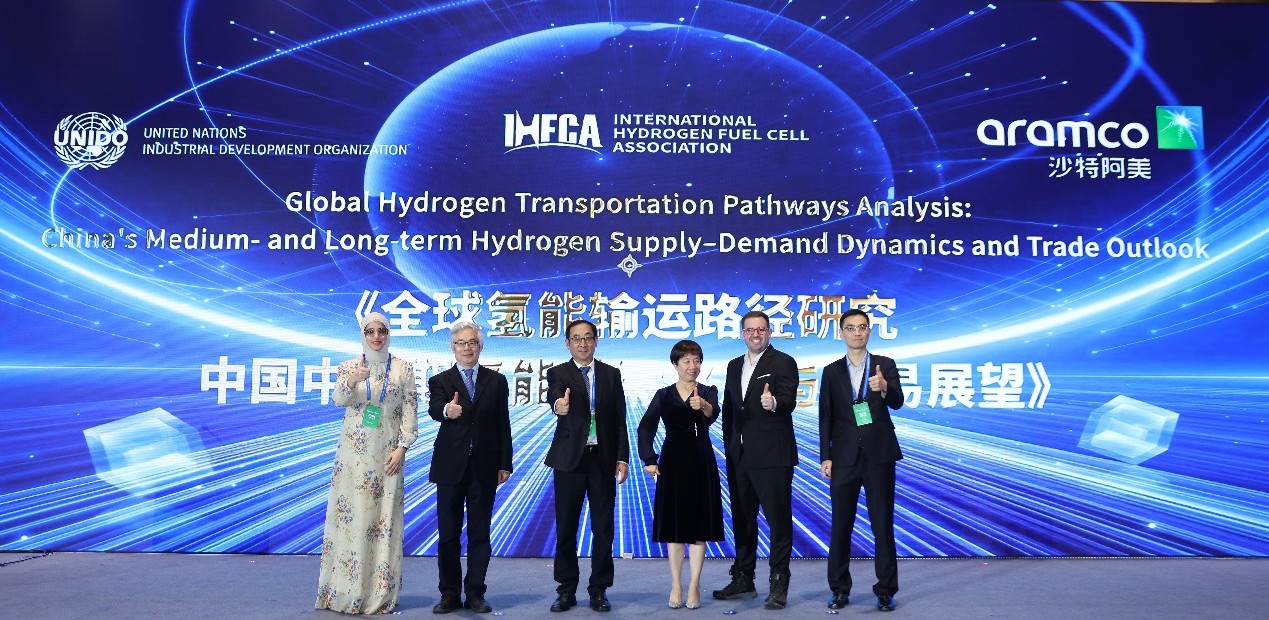
Launch of “Global Hydrogen Transportation Pathways Analysis: China’s Medium- and Long-Term Hydrogen Supply–Demand Dynamics and Trade Outlook”
IHFCA formalised long-term cooperation through a signing ceremony involving Midnite Aerospace Solutions, Mingyue Lake Laboratory and the Deputy Secretary-General of the Secretariat of Chongqing Hydrogen Industry Ecosystem Alliance. The representatives who took to the stage to sign were ZOU Wei, Director of the Academic Exchange Department, IHFCA; Musa MBHOKOTA, CEO, Midnite Aerospace Solutions; XIANG Hu, Deputy Director, Mingyue Lake Laboratory; and ZHAO Hong, Deputy Secretary-General, Secretariat of Chongqing Hydrogen Industry Ecosystem Alliance.
To strengthen cooperation and exchange between industry and academia, IHFCA and Mingyue Lake Laboratory launched the Members’ Corner platform. WANG Ju, Secretary General of IHFCA and Member of CEET, and XIANG Hu, Deputy Director of Mingyue Lake Laboratory, jointly unveiled the plaque on behalf of their respective organisations.
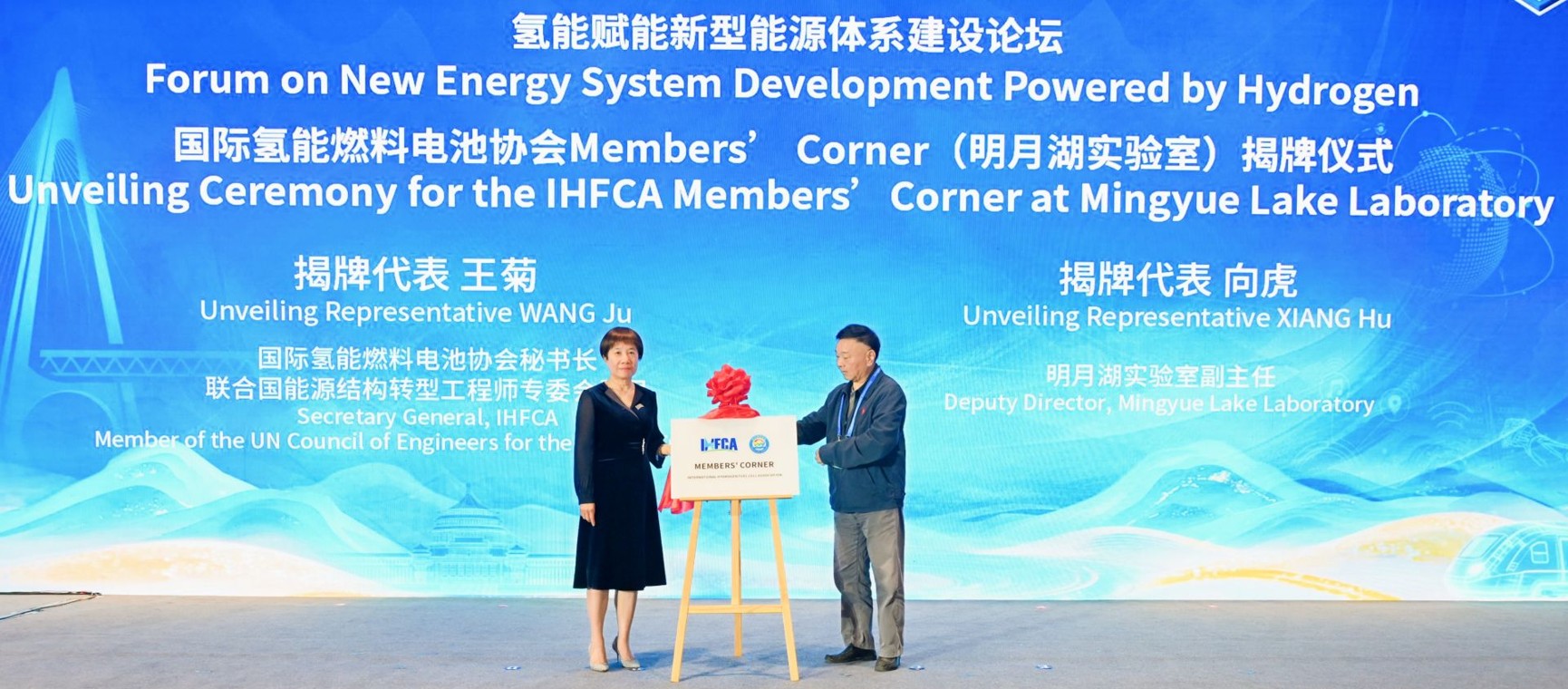
Unveiling Ceremony for the IHFCA Members’ Corner at Mingyue Lake Laboratory
During the appointment ceremony for international advisers, Mingyue Lake Laboratory appointed Benny OEYEN, while Chongqing Digital Transportation Industry Group Co., Ltd. appointed Mikaa BLUGEON-MERED. The appointments will provide international expertise to support the respective organisations’ future development. Benny OEYEN was unable to attend in person for personal reasons, and Clement VIENOT received the appointment letter on his behalf.
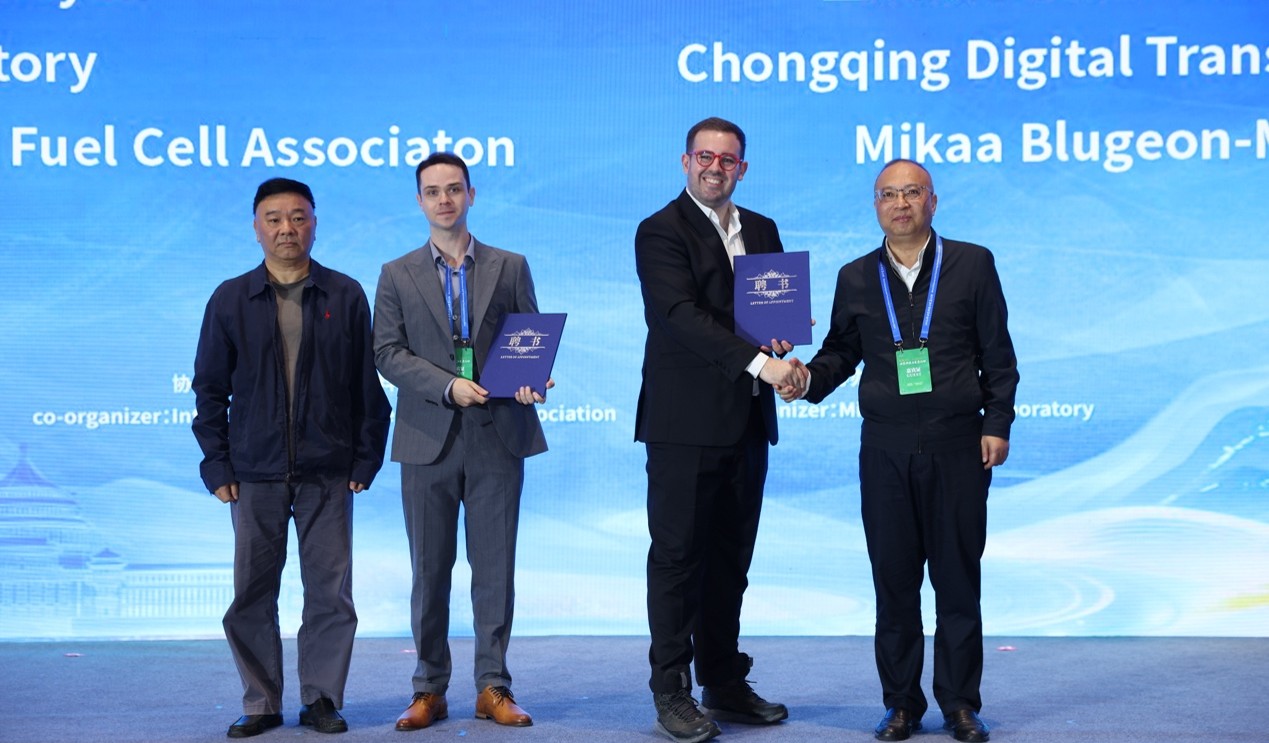 、
Appointment of International Advisers
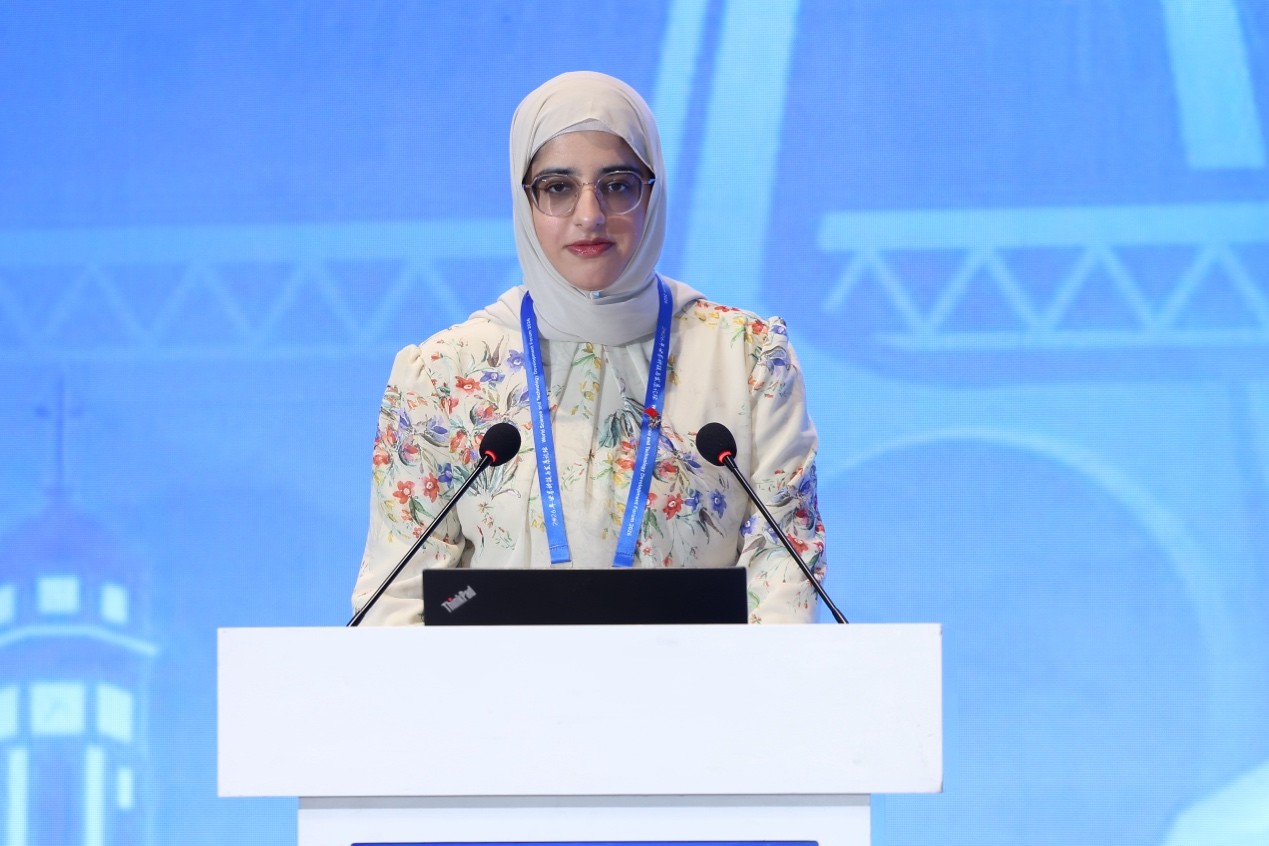
Dinah YAQUB, Trade and Investment Consul at the British Consulate-General in Chongqing
The thematic presentations were moderated by Dinah YAQUB, Trade and Investment Consul at the British Consulate-General in Chongqing. In his presentation, “Exploration of the Development Path of Hydrogen Energy Industry from the Perspectives of Policy Support and Technological Breakthroughs”, LIU Anmin, Director and General Manager of China Automotive Engineering Research Institute Co., Ltd., noted that national strategy had brought hydrogen to the forefront of development priorities. The outline of the 15th Five-Year Plan explicitly identifies hydrogen as a future industry to be cultivated into a new source of economic growth. Hydrogen development has moved beyond regional pilots to become a future industry pursued through coordinated nationwide efforts.
Among the five national pilot city clusters, he highlighted the Xinjiang–Chengdu-Chongqing Twin-City Economic Circle cluster. Sichuan and Chongqing produce approximately 600,000 tonnes of industrial by-product hydrogen annually, with vehicle refuelling priced at RMB 25 per kilogram. A hydrogen refuelling supply network has begun to take shape, and progress has been made in deploying hydrogen fuel cell vehicles and hydrogen-powered two-wheelers. The region hosts more than 200 hydrogen-related enterprises, and nearly 40 hydrogen fuel cell vehicle models have been brought to market. A complete industrial ecosystem encompassing hydrogen production plants, hydrogen mother stations and hydrogen fuel cell commercial vehicles is rapidly taking shape in the Chengdu-Chongqing region.
He called for the region to accelerate the development and interconnection of hydrogen corridors across regional boundaries during the 15th Five-Year Plan period. The region should combine government-guided planning and value-chain coordination with the introduction of applications driven by firm demand. Predictable demand from trunk-route operations would strengthen investor confidence upstream and downstream. This would help the industry shift from policy-driven to market-driven growth, improve infrastructure and utilisation, reduce costs and establish viable, self-sustaining business models. The aim is a virtuous cycle of improved infrastructure, high utilisation, falling costs, clear profitability, capital inflows and industrial upgrading.
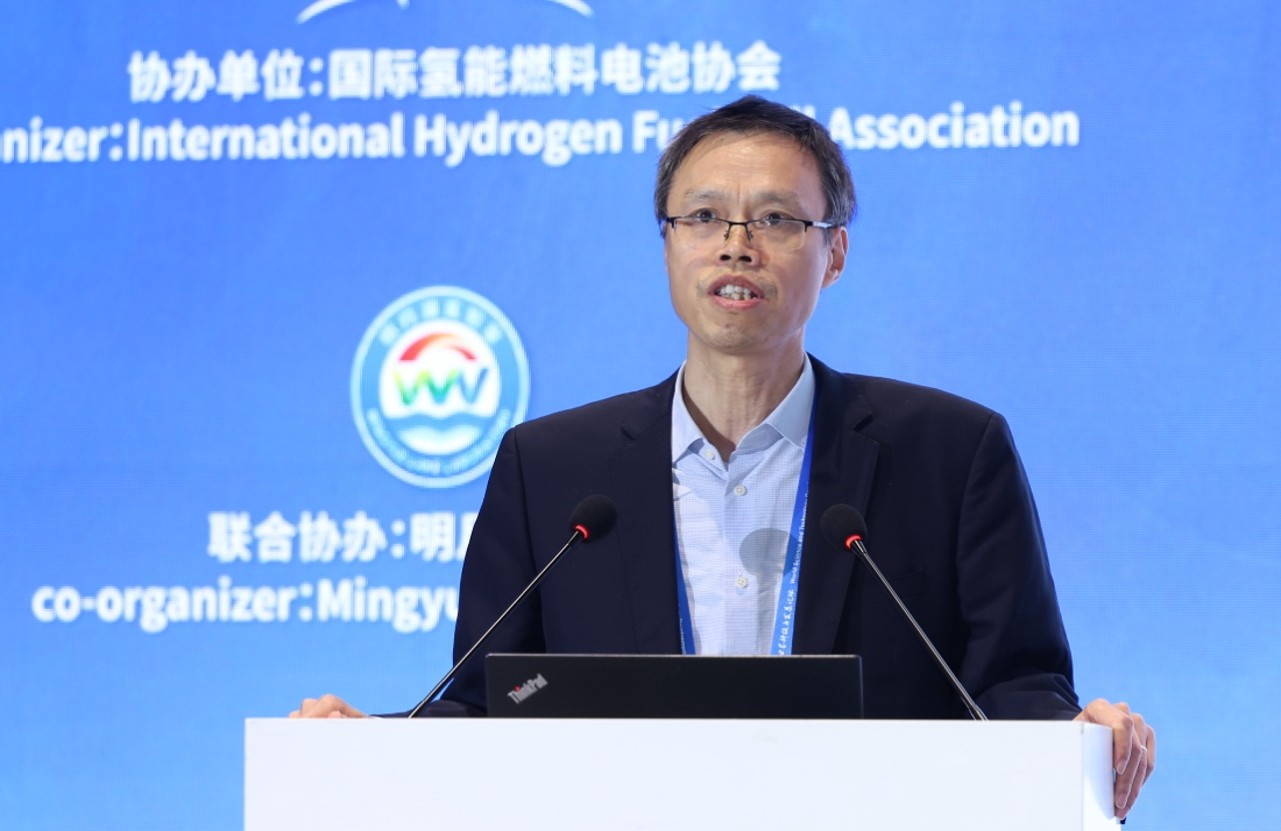
LIU Anmin, Director and General Manager, China Automotive Engineering Research Institute Co., Ltd.
Mikaa BLUGEON-MERED, Senior Expert on Global Hydrogen Markets at the University of Québec and Clean Hydrogen Research Expert in Canada, delivered a thematic presentation entitled “Reducing costs, bridging gaps, scaling-up: H2 corridors as critical success factors”. Focusing on the development of hydrogen corridors worldwide, he noted that scaling up the hydrogen industry depends on connecting production, storage and transport, and end use, while coordinating resources across regions and matching supply with demand. Drawing on hydrogen pipeline network projects in the United States, Europe and China, he highlighted progress in hydrogen pipeline development in Inner Mongolia and large-scale applications in the Chengdu-Chongqing region. He viewed Chongqing as an important example in hydrogen transport demonstrations, policy support and infrastructure planning. He called for stronger value-chain coordination and international cooperation, with an integrated approach to pipeline transport, hydrogen storage and green shipping, so that hydrogen corridors can evolve from infrastructure projects into complete industrial ecosystems.
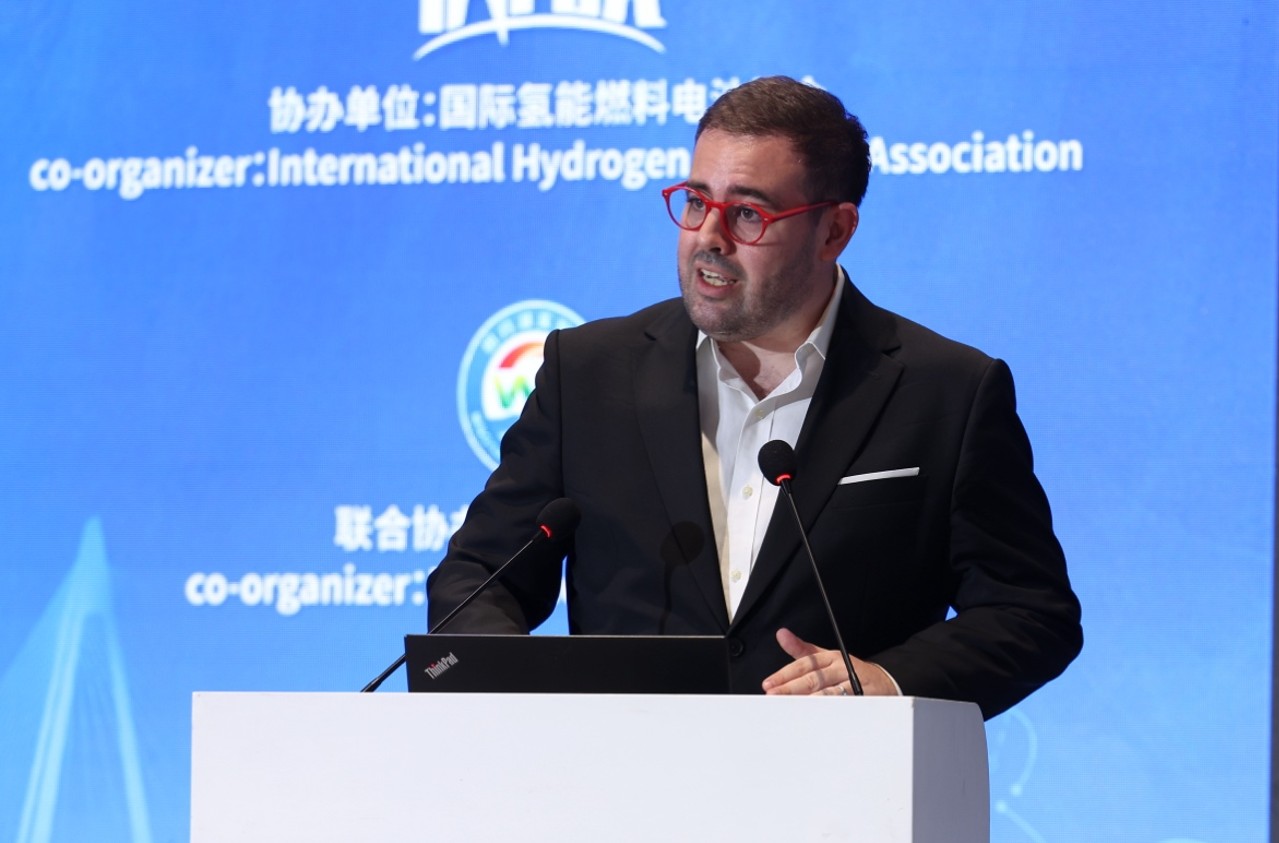
Mikaa BLUGEON-MERED, Senior Expert on Global Hydrogen Markets, University of Québec; Clean Hydrogen Research Expert in Canada
In his thematic presentation, “Industrial Application of Magnesium-based Solid-State Hydrogen Storage Materials and Equipment & R&D Progress from Mingyue Lake Laboratory”, LI Qian, Deputy Director of the National Engineering Research Center for Magnesium Alloys, noted that China had long explored the hydrogen value chain through basic research, practical applications and industrial deployment, seeking to connect the entire chain. A critical bottleneck nevertheless remains between hydrogen production and use: how to store and transport hydrogen efficiently, safely and at low cost. Magnesium-based solid-state hydrogen storage materials offer a viable approach. He noted that China has abundant magnesium resources, the world’s largest reserves and globally leading magnesium industry technologies. The application of magnesium-based solid-state hydrogen storage materials has become one effective way to address hydrogen storage and transport challenges. Mingyue Lake Laboratory is therefore working to improve material stability and enable batch production while maintaining hydrogen storage and transport capacity and rates, helping the hydrogen industry move towards commercialisation and large-scale deployment.
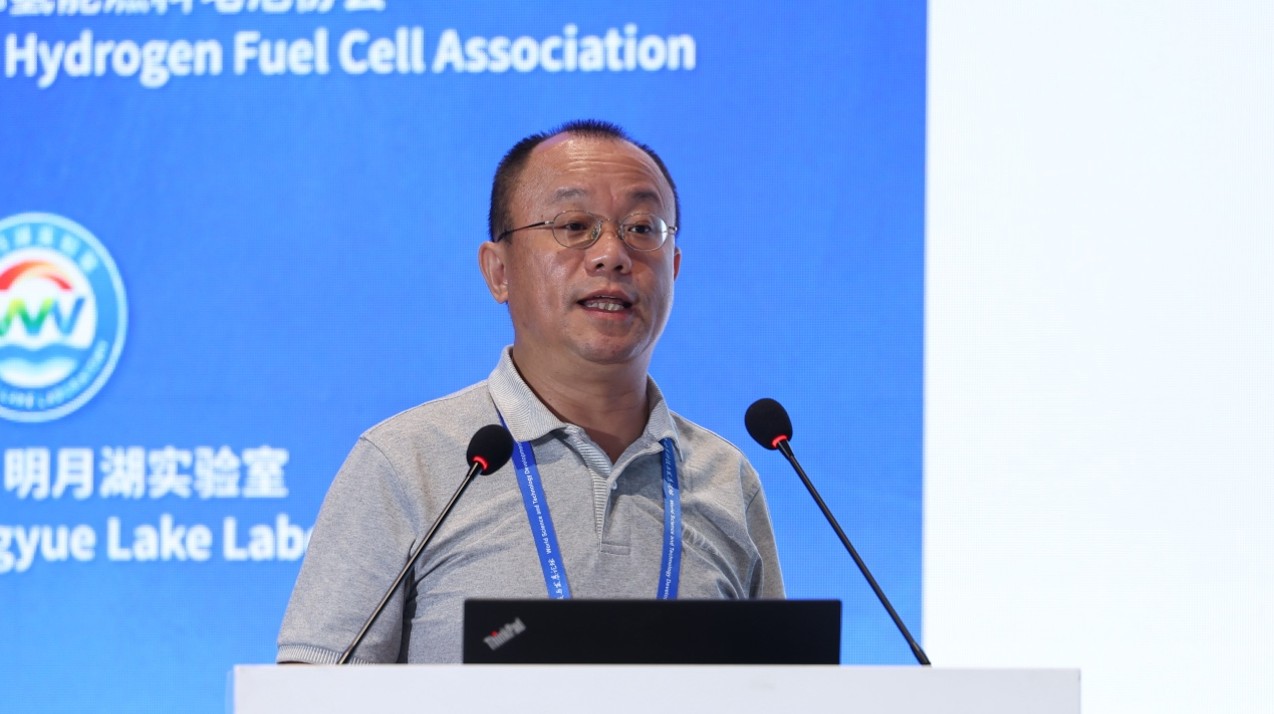
LI Qian, Deputy Director, National Engineering Research Center for Magnesium Alloys
Frank PAN, FHS China GM, delivered a thematic presentation entitled “High-performance Hydrogen Storage Solutions for Hydrogen Industry Development”. He noted that, during the 15th Five-Year Plan period, integrated hydrogen application pilots are being carried out in five city clusters, including Beijing-Tianjin-Hebei, the Greater Bay Area and Xinjiang–Chengdu-Chongqing Twin-City Economic Circle, with policy guidance continuing to expand the market. Current efforts to promote hydrogen in China focus primarily on heavy-duty trucks for long-haul logistics and cold-chain logistics. Nearly four million heavy-duty trucks operate on interprovincial trunk routes nationwide, but most use diesel or natural gas. One key reason is the relatively high purchase cost of hydrogen vehicles. He suggested that continued incentives for fuel costs and road and bridge tolls could substantially improve the overall competitiveness of hydrogen-powered heavy-duty trucks and help establish a viable model for their large-scale deployment.
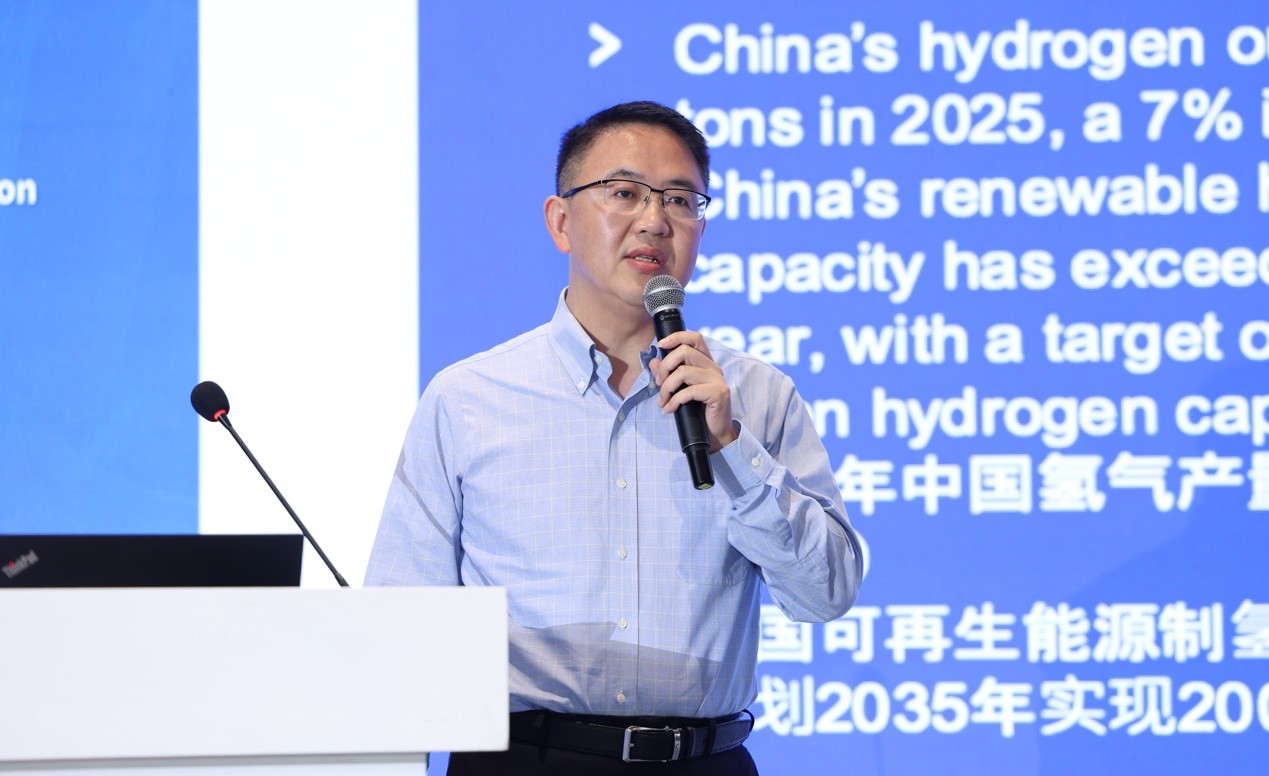
Frank PAN, FHS China GM
ZHANG Fulun, Deputy General Manager of Qingling Motors (Group) Co., Ltd., delivered a presentation entitled “Industrialization Practice and Scenario-based Operation of Hydrogen Commercial Vehicles”. He noted that hydrogen had become a firm, core pillar of China’s energy transition. Chongqing’s outline for the 15th Five-Year Plan explicitly calls for the development of Chengdu-Chongqing hydrogen, electricity and hydrogen production corridors, the large-scale deployment of hydrogen fuel cell vehicles and the establishment of a hydrogen hub in western China. It calls for 60 new hydrogen refuelling stations, with 4,000 hydrogen fuel cell vehicles to be deployed by 2035. As a major artery linking Sichuan and Chongqing, the Chengdu-Chongqing Hydrogen Corridor is central to coordinated hydrogen industry development and resource sharing between the two areas, and is a key focus for joint efforts across society to develop the industry. Qingling Motors will draw on its technological capabilities and work with upstream and downstream enterprises to develop new quality productive forces, build a new industrial ecosystem and advance a shared hydrogen future.
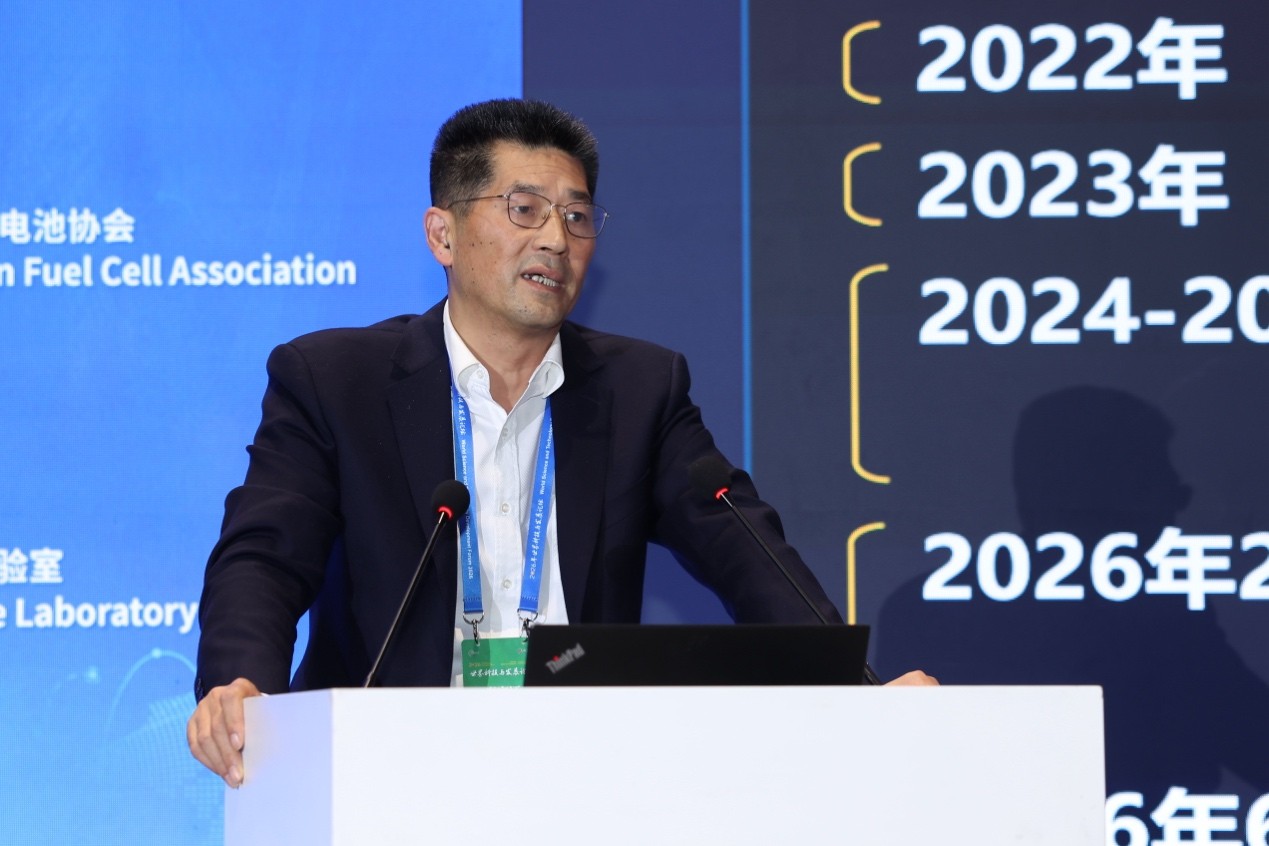
ZHANG Fulun, Deputy General Manager, Qingling Motors (Group) Co., Ltd.
Musa MBHOKOTA, CEO of Midnite Aerospace Solutions, delivered a presentation entitled “South African Green Hydrogen Journey and Commercialisation Opportunities”. He noted that South Africa’s abundant solar, wind and mineral resources, together with its port and transport infrastructure, provide favourable conditions for developing a green hydrogen industry. The country is also an important gateway to markets in sub-Saharan Africa. Its hydrogen industry nevertheless faces challenges, including a shortage of engineering talent, limited commercial applications and insufficient public awareness. He called for the strengths of aerospace technologies in areas such as systems integration and intelligent logistics to be put to use, and for deeper cooperation between China and South Africa on green hydrogen technologies, industrial investment and talent development. Small-scale demonstration projects could provide a starting point for technology transfer, local manufacturing and the development of market demand, accelerating the commercialisation of green hydrogen.
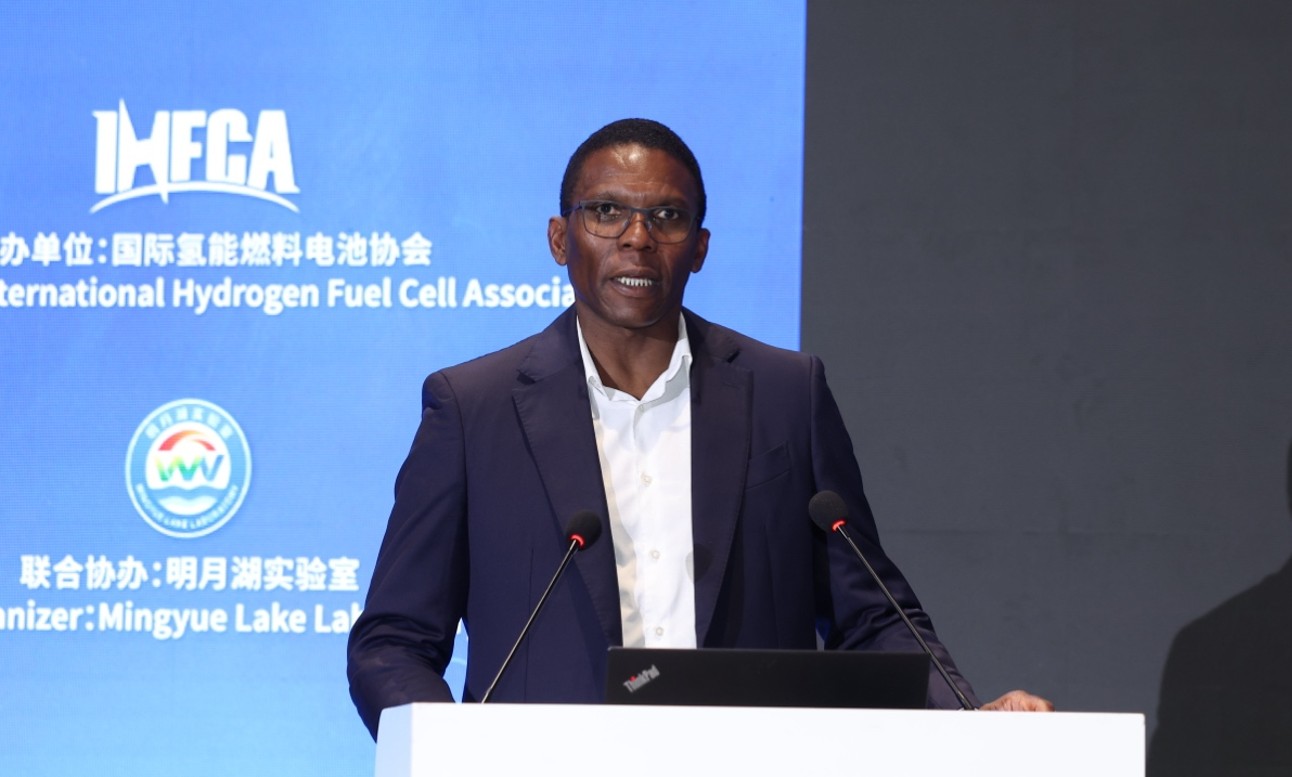
Musa MBHOKOTA, CEO, Midnite Aerospace Solutions
The forum continued with a panel discussion on “Jointly Building a Green Hydrogen Ecosystem · Empowering the Chengdu-Chongqing Hydrogen Corridor and Global Cooperation”, moderated by LIU Heng, Senior Technical Advisor, Climate and Technology Partnerships Division, United Nations Industrial Development Organization (UNIDO). The panellists were ZHAO Hong, Deputy Secretary-General, Secretariat of Chongqing Hydrogen Industry Ecosystem Alliance; XUE Xingyu, Lead Scientist, Aramco Asia; Clement VIENOT, Network Planning & Cooperation Manager, International Hydrogen Energy Centre (IHEC); and Go NAKANISHI, CEO, Integral New Energy. Drawing on their individual perspectives and experience, they discussed hydrogen storage, transport and infrastructure; international energy cooperation and trade; technological innovation and commercialisation; technology localisation and adaptation to market needs; and mutual recognition of standards and international cooperation platforms.
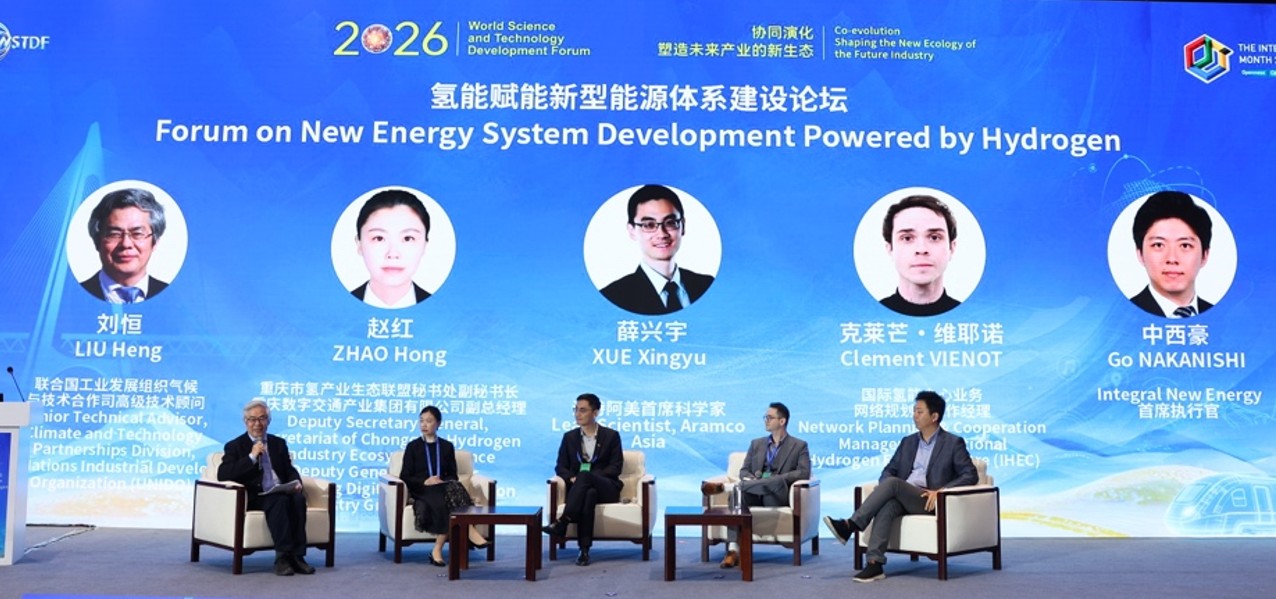
Panel Discussion: “Jointly Building a Green Hydrogen Ecosystem · Empowering the Chengdu-Chongqing Hydrogen Corridor and Global Cooperation”
Hydrogen plays an important role in the green and low-carbon energy transition and the development of a new energy system. Scaling up its use requires coordinated progress in technological innovation, infrastructure and market applications. With the Chengdu-Chongqing Hydrogen Corridor as its focus, the Forum on New Energy System Development Powered by Hydrogen brought together representatives of industry, research institutions and international organisations from China and abroad. They exchanged views on hydrogen technology breakthroughs, industrial coordination, commercial applications and international cooperation. Practical initiatives, including the launch of a research report, the signing of cooperation agreements and the establishment of a cooperation platform, helped bring together innovation resources and translate cooperation into tangible results.
IHFCA will continue to connect partners through its platform, promote technology exchange and the mutual recognition of standards, and advance cooperation on the implementation of demonstration projects. It will work towards an open, collaborative and mutually beneficial hydrogen industry ecosystem, providing practical experience to inform the development of new energy systems and the global hydrogen industry.